
All-on-4 Dental Implants Overseas vs Australia: Pros and Cons

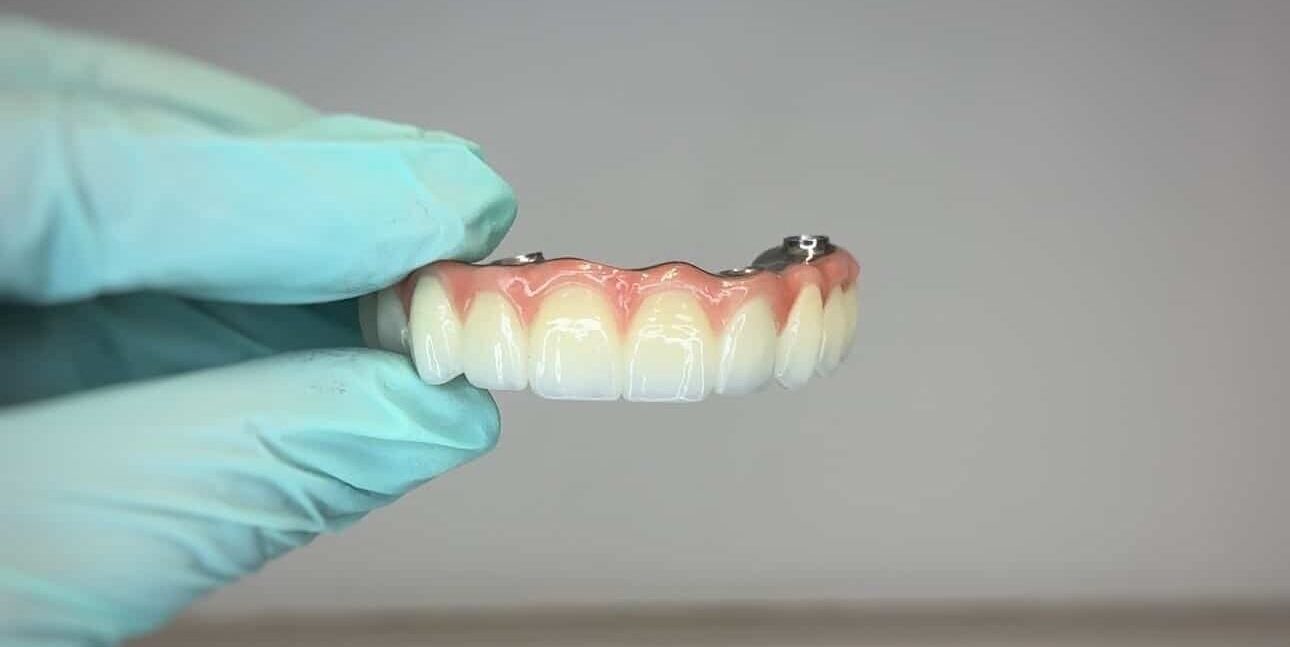
All-on-4 implant bridge. Zirconia

“Thanks for your advice, doctor, but I’m going to Thailand to have my All-on-4 dental implants done. I just can’t afford it in Australia.”

As a practicing dentist in Australia, I hear this more than you might expect. For every person who wouldn’t dream of going overseas for dental surgery, there’s someone else seriously considering it — or already booked in.

And honestly? I understand the temptation. Overseas treatment is marketed as faster, cheaper, and even fun. Who wouldn’t want to fix their teeth and have a holiday at the same time? But there’s more to this decision than glossy brochures and upfront savings. And that’s what I want to share with you here — respectfully, openly, and with the insight of someone who sees the outcomes every day.

What Is All-on-4?

Let’s keep it simple. All-on-4 is a full-mouth dental implant procedure where four implants support a full set of upper or lower teeth. It’s often used as a modern alternative to dentures and is designed for patients with significant tooth loss or damage.

The name “All-on-4” has become a catch-all term, much like calling all tissues “Kleenex.” There are different systems and variations, but the idea is the same: full-arch restoration, fixed in place, and designed to look and feel like natural teeth.

Yes, it’s transformative. But it’s also complex, surgical, and requires careful planning to get right.

Why Do Australians Consider Getting All-on-4 Implants Overseas?

1. Lower Upfront Costs

Overseas dental clinics, particularly in countries like Thailand, Vietnam, Turkey, or Hungary, promote implant packages that are 30-50% cheaper than Australian prices.

That price gap is real, and it’s usually due to:

  • Lower staff wages and operating costs
  • Government subsidies for medical tourism
  • Higher patient volumes allowing cost efficiency

For patients facing quotes of $20,000+ per arch in Australia, it’s easy to see why a cheaper option might seem like a lifeline.

2. Shorter Waiting Times

Clinics catering to international patients streamline everything. Imaging, planning, and surgery can all happen within days of each other. Some patients even send scans in advance to speed things up further.

But here’s the catch: while you can leave with a full set of teeth the same day, those are usually temporary teeth. The implants underneath still need months to properly fuse with your jawbone — a phase known as osseointegration. Rushing this part can lead to serious complications.

Most of the problems I see don’t happen on day one. They happen during the healing phase — when you’re back in Australia and your overseas dentist is an email away.

3. The Holiday Factor

Marketing around dental tourism is clever. It reframes a medical procedure into a vacation. Instead of dreading dental work, patients imagine poolside recovery and local sightseeing. It also makes the story easier to share: “I had a holiday and fixed my teeth” sounds more exciting than “I spent $30,000 at the dentist.”

Many people do come back happy. But that’s only part of the story.
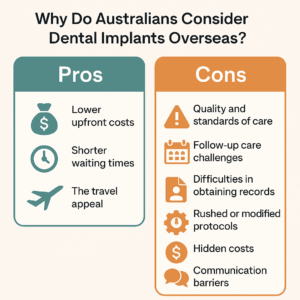
A list of pro's and con's of why Australian's consider dental implants overseas
A visual summary of why some Australians consider treatment abroad

What Are the Risks of Getting All-on-4 Implants Overseas?

1. Quality and Safety Standards

Australian dental clinics are held to some of the highest standards in the world. Overseas, those standards can vary widely.

You may not know:

  • If the implants used are genuine and TGA-approved
  • Whether sterilisation protocols meet Australian guidelines
  • What brand or model was placed (which matters for long-term care)

The clinic may look modern, but without regulation, it’s hard to know what’s happening behind the scenes.

2. No Local Follow-Up Care

Implants are not a one-and-done procedure. After surgery, you need monitoring, bite adjustments, and sometimes corrections. If a complication appears weeks later, who do you turn to?

Many local dentists are unable (or unwilling) to take over these cases due to lack of information or incompatible materials.

Real patient case: A woman returned from overseas with swelling. The clinic told her to “see a local dentist.” When she came to us, we discovered issues with the prosthesis, but couldn’t source parts. She ended up paying more than if she’d stayed here in the first place.

3. Incomplete Records

Patients often return with minimal documentation. No post-op scans, no implant specs, no torque values. Without that, even simple fixes become complex.

4. Rushed or Modified Protocols

To fit into a two-week travel window, many clinics cut corners:

  • Avoiding necessary bone grafts
  • Skipping full health assessments
  • Loading teeth too early onto fresh implants

It might look fine initially, but long-term success often depends on steps that aren’t visible to patients.

5. Hidden Costs

The initial quote rarely includes:

  • Flights and accommodation
  • Extra visits if complications occur
  • Local dentist fees to fix problems

And if the implant brand isn’t supported here, even a loose screw could mean replacing the entire system.

6. Communication Barriers

Even fluent English speakers can miss medical nuances. Misunderstandings about risks, aftercare, or what was actually done are common.

Why Stay in Australia for All-on-4 Implants?

There are reasons local care costs more — and reasons why it’s often worth it.

1. Regulation and Transparency

Everything is regulated by:

That means approved materials, sterile environments, and qualified practitioners.

2. Continuity of Care

From consultation to surgery to maintenance, you’re supported every step of the way. Problems are addressed early. You always have someone to call.

3. Clear, Written Treatment Plans

You’ll receive:

  • A written quote with item numbers
  • Informed consent documentation
  • A clear understanding of what’s included
  • Flexible payment plans available in many cases

There are no surprises — and no upselling.

4. Specialist Experience

Many All-on-4 cases involve specialists in oral surgery or prosthodontics. That means:

  • Advanced planning and imaging
  • Customised treatment for your anatomy and health profile
  • Better long-term outcomes

5. Legal Protections

If something goes wrong, you’re protected by Australian consumer law. Overseas, you’re largely on your own.

Cost Comparison: Overseas vs Australia

Treatment LocationApprox. Cost per ArchFollow-up CareImplant SystemLegal Protections
Overseas (e.g. Thailand)$10,000 – $15,000Limited or noneUnknown or genericNo
Australia$20,000 – $35,000Included (multiple visits)TGA-approved, traceableYes

*Prices vary based on case complexity and materials used.

Questions to Ask Before Booking

Whether here or overseas, ask these before committing:

  • What brand and model of implants will be used?
  • Will I receive detailed post-op records?
  • Who manages follow-up if something goes wrong?
  • Are materials approved in Australia?
  • What is your experience with full-arch implants?

Final Thoughts from Dr Helen

Choosing All-on-4 implants is a big decision — financially, medically, and emotionally. My job isn’t to scare you, but to help you make the best decision with full information.

If you’re considering treatment overseas, I encourage you to ask questions, gather records, and understand the long-term picture. And if you decide to stay local, know that the higher cost often reflects a higher standard of safety, support, and peace of mind.

Want Personalised Advice? Book a Consultation

We offer thorough assessments for patients considering All-on-4 treatment — whether you’re ready to go ahead or just exploring options.

Book your consultation with Dr Helen to get expert advice, clear pricing, and a plan tailored to your health and goals.

*This article complies with the AHPRA advertising guidelines. It is intended for general informational purposes only and does not replace personal medical advice.

Implants have a very high chance of success in a healthy patient who takes care of their general and dental health. There are, however, some factors that can compromise the successful placing of an implant. These include medical disease, excessive smoking or alcohol consumption and poor diet or dental hygiene.

Will Implants Last a Lifetime?

With good care, there is a very high chance an implant will last a lifetime.

Is Age a Deterrent?

Health is the determining factor, not age. In fact implants are most often needed later in life after losing some teeth.

Is it Expensive?

Implant procedures vary in complexity and extent. Depending on the patient’s dental and medical circumstances, implant procedures can involve a significant financial outlay. I have a high success rate and many very satisfied patients.

Will My Health Fund Pay?

This will depend on the level of your cover. We are happy to make enquiries on your behalf with your individual health fund.

Will there be Discomfort?

As with any surgery, there can be some degree of pain or discomfort. However, modern anaesthetics virtually eliminate all pain during and after the procedure.

How much time will it take?

This depends on your individual circumstances and the extent of work involved. There will usually be a series of procedures and follow-up visits over a period of some months.

How long will I be off work?

Generally patients can resume work the day after the procedure. In some cases you may experience some swelling, discomfort, or minor bruising.

In recent years, to meet market demands and reduce fees, many dentists have turned to lower quality, often overseas made implants. As a result, we are seeing higher failure rates, poorly fitting crowns and less aesthetically pleasing results.

When you shop around for best prices, you will find a dramatic variation in fees between dentists. Most people aren’t aware of how low prices are achieved. Several factors need to be considered in making your choice.

What is an implant?

A dental implant is a titanium “root” used to support a porcelain tooth replica or a group of teeth. A typical implant consists of a fixture made of commercially pure titanium, which after three months fuses to your jaw bone, much like a replacement hip or knee would. A porcelain tooth or teeth is then attached to the implant or denture, locking it into place.

Implant success and technical considerations

Generally a well-planned and expertly executed implant procedure has success rates in the order of 98% and most people could expect a dental implant to last for life. Implants rely on their support from adequate bone thickness and quality. However, a poorly placed or angulated implant or an implant squeezed into an area of insufficient bone, to save you money, has high risk of failure. Implants don’t fail quickly. They can take 10 years to deteriorate. Unfortunately as they fail slowly and painlessly they can cause bone dissolution at the same time. At the time of failure, there is usually insufficient bone to replace it and reparative procedures will cost you thousands, negating any savings you would’ve made in the first place. When people need a hip replacement or a kidney operation, they usually look for a good surgeon. It is important to understand that implants are not a commodity, but a delicate surgical procedure that needs to be performed by a highly qualified surgeon for long term success.

Despite popular belief, implant brand rarely determines the success of the procedure. Most modern, well respected brands manufacture high quality implants. Success is in the hands of the operator.

Implant supported crown

The tooth replica or the crown also needs to satisfy a number of requirements. It needs to be proportionate to the length and size of your implant as to not overload it and be made of high quality pure materials to prevent fractures and corrosion. It also must look like a natural tooth and fit snugly between adjacent teeth so there are no hard-to-reach areas where food can become trapped and cause infection. It must also satisfy comfort and functionality requirements.

All of this might sound quite straightforward, but in fact a crown is a well-crafted piece of dental engineering requiring great technical skill and talent on the part of both dentist and the dental technician. Great care, skill, time and honesty will determine whether you end up with a superior long-term result or a mediocre crown. The laboratory technician needs to be up-to-date with modern methods of manufacture, and comfortable working with the latest materials. These technicians are hard to come by even in Australia and their work is not cheap.

Practicality

When considering implant treatment, most patients are unaware that they will most likely be referred by their dentist to one or more specialists at different stages of their treatment. This can be time consuming, expensive and stressful. For long-term success, it’s important that the dentist you select to do your implants understands, and is qualified to handle all aspects of implant treatment.

Even more alarming is the trend of going overseas to have dental treatment done. We receive several phone calls a week from people with overseas-made disasters. Once again you will reap immediate savings but after numerous trips, airfares, the cost will often come close to what you’d expect to pay in Australia. There are many skilled surgeons around the world. However, if you have any complications such as infection, crown loosening or failure, there is often no one equipped to deal with these conditions in Australia as systems used overseas are often different. Also, financially it is entirely your responsibility.

Quality

Most people are unaware that some dentist send their work directly to China; cutting out the middle man. Others use local Australian laboratories that outsource work to China. This creates the impression that the work is Australian made when it’s not.

Metals and porcelain used for veneers and crowns vary greatly in quality. This information is not freely available to the public, but to somebody who is having the procedure done, this can mean the difference is between success and failure. In addition, lead contamination has been implicated in overseas made crowns. As with most things, quality will be reflected in price.

I always encourage people to do their own research. However, no matter how thorough your research is, results are entirely in the hands of the professionals you choose.

Summary

When selecting a dentist to do your implants, be cautious and don’t let the lowest price influence you. Please consider all variables when evaluating value for money, such as the integrity and skill of the practitioner and technician, in addition to the quality of materials. Long term success should always drive your decision.

For stringent quality control, our work is crafted by a leading Australian laboratory from superior materials to ensure that what goes into your mouth is of the highest standard.”

If you have any further questions or concerns, please call our office on (03) 9510 5597. With extensive training and experience in implant procedures, we will assist you in making your decision.


Cost is a big consideration and the most commonly asked question from people who are considering this treatment. Using traditional methods of using 5 to 8 implants, an upper or lower arch would cost $30,000 – $50,000.

With the advent of the All on 4 procedure, the cost of rehabilitating full arch of teeth has come down. This is because there is often no need for bone grafting and allows the dentist to use only 4 implants.

In Australia, All on 4 treatment can range anywhere from $18,000 to $30,000

The wide range of fees are due to the following reasons:

  • Type of implants used for the procedure
  • Need for bone grafts to regenerate lost bone
  • Quality and the quantity of bone available in your mouth
  • Diagnostic tests before the surgery
  • Quality of the final restoration (teeth)
  • Customisation required
  • Experience/skill of your dentist/surgeon
  • Having surgery performed under general or local anaesthetic

We are a small practice and therefore we are able to focus on your individual needs, providing utmost care. Our fees reflect the highest quality of outcome we deliver. Whilst still priced at the lower end, we offer value for your money by incorporating in our fees many options often offered as additions in other clinics. If you need both upper and lower arches done at the same time, it takes less time to than if they were done individually, offering savings for both arch treatment.

In some cases, you may be able to have some cost alleviated by your dental insurance. However, most insurance companies only offer small rebates.

Remember that nothing in life worth having comes free or cheap, so be careful with big discounts or cheap overseas “solutions”. Be certain that the dentist you choose is experienced, offers ongoing care after initial treatment completion and uses trusted implant providers so that if you require a part replacement years later, components are freely available.

Though by no means this is a cheap treatment, All on 4 is an investment that will positively influence your appearance and your overall health.

We are happy to answer any questions you have specific to your situation. Please feel free to give us a call on (03) 9510 5597.

RELATED

In an age where Medicare offers no relief on dental treatment, there are many, many people out there who struggle to afford dentistry. Dr. Helen, a Melbourne-based dentist whose expertise in dental phobias and implant surgery, knows these patients’ struggles ...

It’s been five, ten, even fifteen years since you’ve scheduled a dentist appointment. The thought of sitting in the chair, the sound of the drill, the sharp-edged memories of the mobile dentists in childhood with their impatient, rough hands are ...

About Dr Helen

With over 20 years of experience, Dr Helen’s work has restored the smiles of countless patients, even the ones who had lost all faith in their teeth.

She opened up her East Prahran Studio in 2008 after working across regional Victoria and gaining broad experience in emergency, surgical and cosmetic dentistry.

Her aim is to always provide gentle care with the highest quality outcomes for patients. From the first consultation, right through to post-op care, she ensures she is there for every patient.

Indicative Pricing

We would like you to be well informed, so we have put together a rough fee guide. However, each treatment is based on individual needs and requirements, and we will prepare a customised treatment plan for you after your initial consultation.