Why Living with Dentures Doesn’t Have to Be a Life Sentence
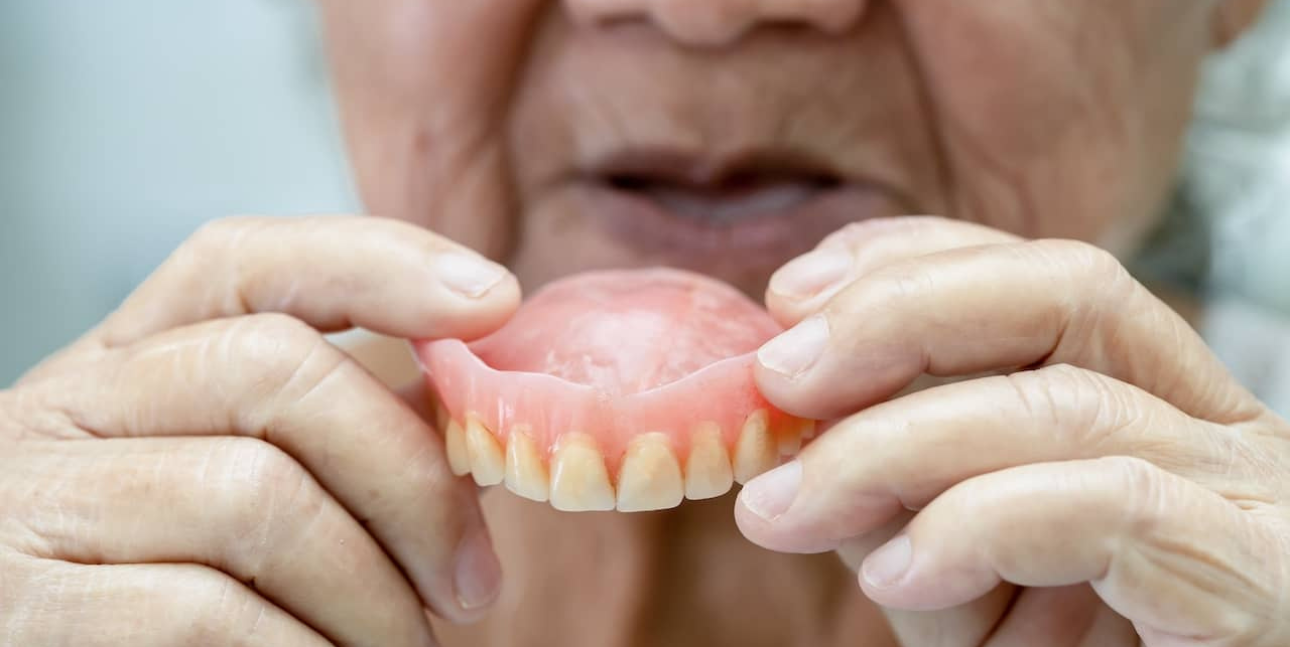
If you wear dentures, you probably know the routine all too well: the slipping, the sore spots, the endless tubes of adhesive, and that cautious way you bite into food as if it might betray you. At first, dentures can feel like a relief, finally having teeth again. But over time, they can turn into an everyday frustration, uncomfortable, unstable, and far from natural.
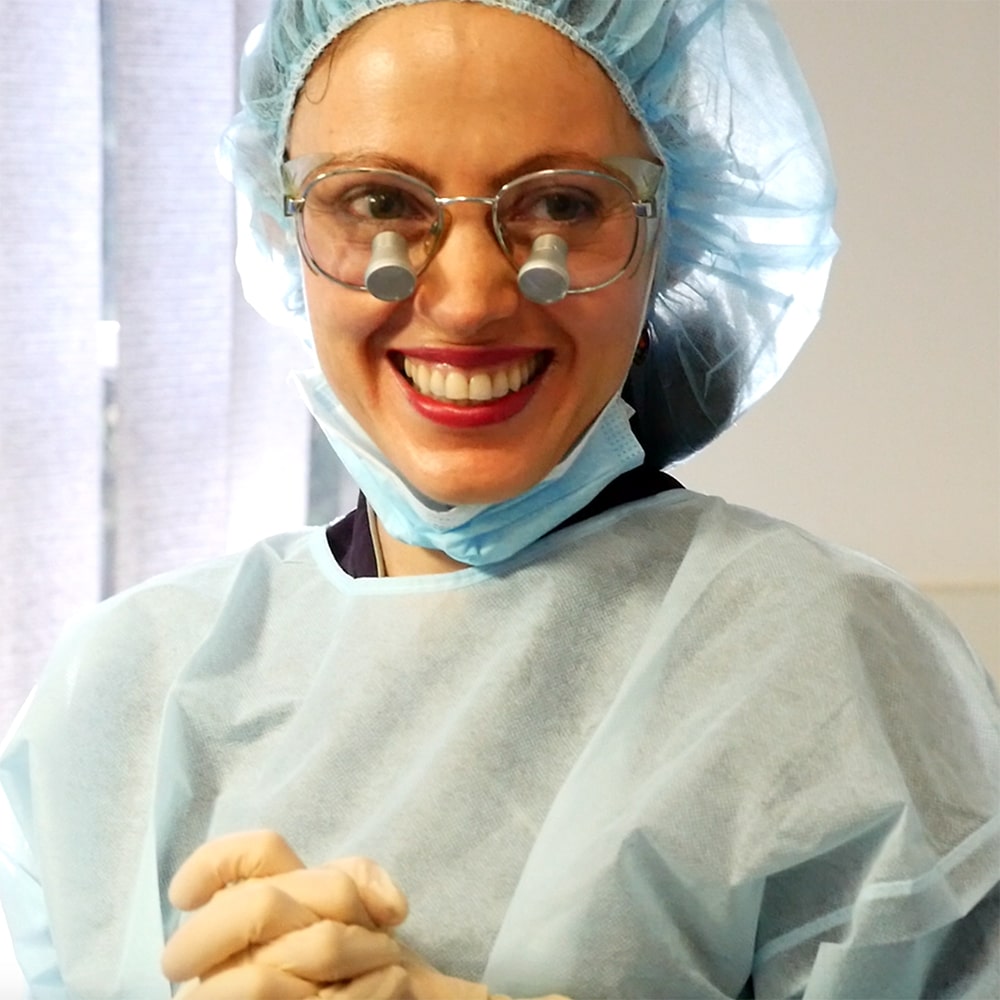
I’ve met countless patients over the years who’ve whispered the same words in my chair: “Dr Helen, I’m just so tired of my dentures.” They tell me how they avoid the foods they enjoy, how they worry about their dentures coming loose when they laugh, and how they miss the simple joy of biting into an apple without fear.
The good news? You don’t have to live like that anymore.
Full mouth dental implants have transformed what’s possible for people who once thought dentures were their only option. They’re fixed, comfortable, and designed to look, feel, and function similar to natural teeth, giving you back the confidence and ease that dentures often take away.
In this blog, I’ll look closely at how full mouth dental implants work, why they feel so different from dentures, what the process involves, and how they can completely change your experience with eating, smiling, and living. Whether you’ve worn dentures for years or you’re just exploring your options, this guide will help you understand exactly what’s involved in clear, practical terms.
Although there is a place for traditional full dentures, despite their long history, often end up causing more problems than they solve.
The Denture Dilemma
Dentures date back centuries. For generations, dentures were the go-to solution for missing teeth. They offered something that felt like beautiful teeth again, and for a long time, they were the only option available.
The biggest advantage of dentures is their affordability and accessibility. They don’t require surgery, bone grafting, or long healing periods. For many patients, especially those with certain health conditions or limited budgets, dentures can be a practical solution.
For someone who wants to restore their smile quickly, with minimal upfront cost and no surgical recovery, dentures remain a valid and important treatment option.
However, it’s worth noting that dentures don’t prevent bone loss or restore full function, which means they often serve as a stepping stone rather than a permanent fix. Many of my patients who start with dentures eventually choose implants later in life once they’re ready for something more stable and lasting.
Anyone who has worn dentures for more than a few months knows they are not the dream teeth you wanted.
They can slip at the worst possible times. They can rub against your gums and cause sore spots. You have to take them out at night, soak them, clean them so that fungus (Candida albicans) doesn’t grown under your dentures.
The reason dentures lose their fit isn’t because they’re poorly made or because you’ve done something wrong. It’s because of what happens underneath. Once your natural teeth are gone, the jawbone that used to support them slowly starts to shrink. Without roots in place to stimulate it, the bone begins to resorb, changing the shape of your jaw. As the jaws and gums shrink over time, that perfect fit becomes less and less reliable. Even worse, dentures promote bone loss. For patients considering implants, I advise to go straight from teeth to All-on-X full mouth implants, if possible, and avoid dentures altogether.
You might find yourself returning to the dentist for adjustments, relines, or even a new set every few years. And the more your bone shrinks, the less support your dentures have, creating a frustrating cycle that never truly ends.
Beyond the discomfort, dentures can also make eating and speaking harder than they should be. Dentures are known for their reduced chewing capacity – 15% that of natural teeth to be precise. Foods you once enjoyed, like apples, nuts, or crusty bread, suddenly become risky or off-limits. Many denture wearers tell me they’ve stopped smiling freely because they’re worried about movement or clicking sounds.
The truth is, dentures can only do so much. They replace the look of teeth, but not the feel or function of them. That’s where full mouth dental implants come in, offering a solution that feels solid, stable, and truly part of you.
What Are Full Mouth Dental Implants?
Full mouth dental implants (commonly referred to as All-on-4® or All-on-X) are a modern, fixed solution for replacement of full arch of teeth. Instead of resting on top of your gums like dentures, they are anchored into your jawbone, acting just like real tooth roots.
Think of them as your next best thing after your natural teeth. They will never be as good but they come much closer to natural teeth in function than full dentures.
Here’s how it works. A minimum of four titanium implants are placed into the jawbone to act as anchors. Once healed and integrated with your jaw bone, they support a custom-made bridge of new teeth and gums. Depending on your situation, this may involve four, six, or more implants per jaw.
You may have heard terms like “All-on-4®“, “All-on-X” or “implant-supported bridge”. These are simply different terms for achieving the same outcome – a full, fixed set of teeth supported by implants rather than sitting loosely on the gums.
The implants are made of grade 4 or 5 titanium, a material that integrates with bone. This process, called osseointegration, gives implants their incredible strength and stability. Once healed, they become part of your body, so much so that they are difficult to remove.
From a lifestyle point of view, full mouth implants are liberating. You don’t have to take them out at night. You don’t have to worry about adhesives or cleaning them in a glass of water by the sink. Not that it is any easier to do, but full mouth implants need to be brushed and flossed in the mouth, similar to natural teeth. You can eat confidently, laugh without hesitation, and smile without thinking twice.
Full mouth implants might not be perfect, and we still have along way to go perfecting the technology to make them stronger, thinner and even more comfortable, but they are a huge improvement on full dentures. As some of my patients say, “They are the teeth I’ve never had.”
If you’d like to learn more about how we plan and carry out this treatment, visit our page on Full Mouth Dental Implants for a more detailed explanation of the process and available options.
Why Implants Feel and Function Better
As one of my patients, Craire, put it after getting full mouth dental implants, “I can’t believe I can bite a corn cob again”. This says it all about why people go under the knife to replace what mother nature has given them. It’s not just about having teeth that stay still when you talk or laugh. It’s about regaining the strength, comfort, and confidence that most people lose with dentures.
Let’s look at what makes implants so different.
1. Comfort You Can Rely On
While implant retained prosthetic teeth are thicker than your natural teeth, unlike dentures, they are fixed in place. They don’t rub against your gums or create pressure points because they’re anchored to your jawbone, just like real teeth. There’s no rocking, no movement, and no sore spots. You simply forget they’re there, which is exactly what you want from teeth.
2. Strength to Eat What You Love
Dentures rely on suction and adhesives to stay in place, which limits how much biting force you can use. With implants, that force comes from the bone itself, giving you stability. Although I advise my patients not to bite very hard biscuits and exercise caution with bread crusts, imagine biting into a corn cob or a sandwich without worrying that your teeth might move. For many patients, this is the moment that truly feels life-changing.
3. Natural Expression
Because implants don’t shift or move, you don’t need to hold your mouth a certain way to keep your teeth in place. You can laugh freely, talk easily, and feel like yourself again.
4. Long-Term Bone Preservation
Dentures rest on top of the gums and do nothing to preserve the jawbone underneath. Over time, that bone continues to shrink, making dentures looser and less stable. Implants, on the other hand, actively maintain the bone by stimulating it the same way natural roots would.
5. Confidence That Shows
When you don’t have to think about your teeth, you start living differently. You smile wider, you laugh louder, and you stop worrying about what you can or can’t eat. It’s hard to put a price on that kind of freedom.
Many of my patients describe their implant treatment as the best decision they’ve made for their health and confidence. The difference is not only physical but emotional – it’s the sense of having your own teeth again, not a removable substitute.
Full mouth implants don’t just replace teeth. They restore function, comfort, and quality of life in a way that dentures simply can’t.
Perfect. Here’s the next section, calm, clear, and confidently walking the reader through the process in a reassuring, step-by-step way that feels personal and expert-led.
The Process: From Consultation to New Smile
At our practice, I like patients to be well informed and know exactly what to expect from the very beginning. Here’s what the journey typically looks like.
1. Initial Consultation
Everything starts with a detailed consultation. This is where we talk about your goals, your current challenges with dentures or missing teeth, and what you want from your new smile. We explore all your treatment options, not just full mouth implants. If dentures or bridges is the best option for you, great! If implants are appropriate, then we investigate further. We talk about the process, success, complications, cost and what to expect from the treatment. If you have any specific questions, this is a good time to ask them.
2. Digital Planning and 3D Imaging
Every implant treatment is customised. Using 3D imaging, photographs, smile design and surgical guides, we can plan the exact position of each implant with millimetre precision. This technology helps us achieve predictable outcomes, reduce healing time, and ensure your new teeth fit comfortably and look natural.
This stage is where art meets science. Your new smile isn’t just designed to function well but to complement your facial features, ensuring it looks balanced and natural. If you have any specific requests, please voice them with me. I will help you understand if they are realistic, and if so we will endeavour to address them.
3. Implant Placement
After all the preparation, finally comes the day of the surgery. Depending on your comfort level, the surgery is usually done under general anaesthesia, which is especially helpful for patients who feel anxious about dental treatment. A qualified anaesthetist puts you to sleep and monitors your condition every minute of the process.
During the surgery, titanium implants are placed into their pre-planned position. Depending on how tightly the implants anchor in your jaw, we may be able to attach a temporary fixed bridge on the same day or within a few days of the surgery, so that you don’t have to go without teeth for long. If the implants are not tight enough on the day of the surgery, yo will need to keep wearing dentures for 3-5 months until implants
integrate with your jawbone.
4. Healing and Integration
Over the next three to five months, the implants integrate naturally with your bone in a process called osseointegration. This is what gives them their strength and stability. During this time, you’ll wear your temporary teeth. however, you have to be very careful with what you eat. Soft foods will be your best friend. If you put too much force on your teeth prematurely, your implants might not integrate. it is important to eat soft, mushy foods for the duration of the healing process. Otherwise, there’s minimal discomfort, and day-to-day life continues as normal.
5. Final Restoration
Once the implants are fully integrated, we replace your temporary teeth with your final bridge. If there is anything you don’t like about your temporary teeth, now is the time to refine it. You will have the opportunity to visualise your final teeth with in-mouth trials. We will discuss and implement the necessary changes before the final bridge is processed.
6. Follow-Up and Maintenance
Full mouth implants are designed to last many years with proper care. Just like natural teeth, they need daily flossing and regular cleaning and professional check-ups. We provide detailed aftercare instructions and ongoing support so you can maintain your results long term.
If you’d like a more detailed explanation of how each stage unfolds, including real case timelines, visit our blog on All Teeth on 4 Implants: The Process from Consultation to Final Results.
For many people, the journey to a new smile feels much simpler than they expect. With modern technology and careful planning, it’s a smooth, predictable, and genuinely life-changing experience.
Understanding the Denture Process
It’s important to recognise that dentures still have a place in modern dentistry. They’ve been around for centuries for a reason. They remain one of the most accessible and cost-effective ways to replace missing teeth.
For some people, dentures are a perfectly reasonable starting point. They can restore appearance, allow basic function, and help rebuild confidence in social settings. And, of course, they come without the need for surgery, which can be reassuring for patients who prefer a non-invasive option.
Here’s what the typical denture process involves:
1. Impressions and Design
Your dentist takes detailed moulds of your mouth to capture the shape of your gums and any remaining teeth. These are used to create a customised model of your dentures. The design process allows for adjustments to tooth shape, shade, and alignment so that your dentures look natural and complement your face.
2. Try-in
We try your denture teeth set in wax in your mouth to assess the fit, stability, as well as the shade and aesthetics of your denture teeth.
3. Fittings and Adjustments
Once your dentures are fabricated, you’ll have a fitting appointment to fine-tune comfort and function. This might be followed by a series of appointments to adjust and fine tune the fit. This step is crucial because even small adjustments can make a big difference in how stable your dentures feel.
3. Adapting to Daily Life
When you first start wearing dentures, there’s always an adjustment period. Your mouth needs time to get used to them, and you’ll likely experience some sore spots or changes in speech and eating. Over time, most people adapt and learn what works best for them.
4. Maintenance and Replacement
Dentures require daily cleaning and occasional professional adjustments as your mouth changes shape. On average, they last about five to seven years before needing replacement, as the fit and comfort decrease with natural bone changes over time. It is important to take your dentures out at night to let your gums “breathe” so that they don’t develop fungal infections.
What About Cost?
Let’s talk about the question that’s always on people’s minds: how much does it all cost?
There’s no denying that full mouth dental implants are a significant investment. In Australia, a complete set of fixed implant-supported teeth can range from $25,000 to $35,000 per jaw, depending on complexity, materials, and the specific system used. While that’s a substantial amount, it’s important to look beyond the upfront cost and consider the long-term value.
Dentures, by comparison, are far more affordable at the start. A full set of upper and lower dentures may cost a few thousand dollars, and for many people, this makes them the only accessible option. But dentures often need replacement every few years, along with periodic relines, adjustments, and adhesive products to maintain comfort. Over time, those smaller costs add up. However, there is no doubt that even after several sets of dentures, they will still be cheaper than All-on-X implants.
Implants are designed as a fixed and comfortable alternative to dentures. They are more involved, costly, and require maintenance. You also need to consider that at some time in the future, be it 5 or 20 years, you will need to replace your prosthetic teeth as they wear. This comes at significant cost of around $10,000 for each jaw. The better you look after your implants and prosthetic teeth, the longer they will last.
For those concerned about affordability, there are options worth exploring. Some patients are eligible for payment plans or to access their superannuation funds on compassionate grounds to help cover the cost of essential dental treatment.
Because upper dentures have suction and are generally more stable than lower dentures, some people opt to only replace their lower dentures with full mouth implants, and continue to wear upper denture, to essentially half the cost of the procedure.
Ultimately, whether dentures or implants are right for you comes down to priorities – immediate affordability versus long-term stability, convenience, and confidence.
For many people who have lived with the daily frustration of dentures, the freedom and comfort that come with implants make the investment worthwhile.
Are full mouth implants Right for Everyone?
While full mouth dental implants can be life-changing, they’re not the ideal solution for everyone. Just as every smile is unique, so is every patient’s oral and general health. That’s why the first and most important step is always a thorough assessment and an honest discussion about suitability.
Generally, full mouth implants are best suited for people who:
- Have lost most or all of their teeth and are seeking a stable, fixed alternative to dentures
- Have sufficient bone to support implants, or are suitable candidates for bone grafting
- Maintain good general health and are non-smokers or light smokers
- Want a long-term, fixed replacement rather than a removable option
Even if you’ve been told in the past that you’ve “lost too much bone” for implants, that doesn’t always mean they’re out of reach. Modern implant systems and techniques, including angled placement or bone regeneration procedures, can make it possible for many patients who were once considered unsuitable.
There are also cases where dentures remain the more practical choice. For example, if a patient has significant medical conditions that make surgery risky, or if their budget doesn’t currently allow for implant treatment, dentures can still provide a functional and aesthetic improvement.
As a dentist, my goal is never to push one option over another, but to guide patients toward the solution that fits their needs, health, and lifestyle best. Sometimes that means starting with dentures and transitioning to implants later. Other times, implants are the right choice from the start.
The key is understanding that you do have options, and that with proper planning, almost every patient can find a comfortable and lasting way to restore their smile.
If you’re unsure where you stand, the best place to begin is with a personalised consultation. We’ll review your oral health, take 3D scans, discuss your goals, and outline a clear plan that’s tailored specifically to you.
Takeaway: Regain Comfort, Confidence, and Control
Living with dentures doesn’t have to be a lifelong sentence of discomfort or compromise. Modern dentistry offers a fixed, comfortable, and natural-looking alternative through full mouth dental implants.
For many people who have spent years struggling with loose or painful dentures, implants offer a new sense of freedom. The ability to eat confidently, speak clearly, and smile without hesitation is more than cosmetic. It is transformative.
If you’re tired of the daily routine of adhesives, sore spots, or worrying about your dentures slipping at the wrong moment, it might be time to explore a better option. With full mouth dental implants, you can enjoy the comfort and stability of teeth that feel like your own again.
At our dental studio, every treatment plan begins with an in-depth consultation where we look at your goals, assess your bone health, and design a solution that suits your lifestyle. Whether that’s implant-supported teeth or another approach, the goal is always the same, to help you eat, smile, and live with confidence again.
If you’re ready to leave the discomfort of dentures behind and discover what’s possible with full mouth dental implants, book a consultation today. Let’s create a smile that feels as good as it looks.